6 · Iron and Many Other Diseases
A feature of a number of other diseases is either iron overload or degraded iron metabolism. Decreasing the iron load of the ill person has either been shown or suggested to treat them. Following are a few of them. I use the word “few” advisedly, since iron is involved in virtually all pathological processes in some way or another.
Infections
Infectious organisms (pathogens), like all other living things, require iron, and have evolved systems to acquire iron in the hosts that they infect.
In the eternal arms race between parasite and host, living things have also evolved ways to withhold iron from microbial invaders.
Most bacterial, all fungal and all protozoan pathogenic invaders require iron as an essential growth factor. Viruses use iron in the host cell for their reproduction, even though they contain no iron themselves. The less iron available for these organisms, the less the likelihood of becoming infected and the less the severity of the illness in case of infection.78lxx
Some pathogenic microorganisms invade cells (intracellular pathogens), and are able to acquire iron-containing ferritin molecules for their own purposes. Other pathogens may dissolve tissues and thus obtain the iron in them.79lxxi Intestinal pathogens such as Salmonella grow better when they have more access to iron, and iron supplementation can increase the rate of infection with organisms like these.
Sepsis is a serious and often fatal infection in which bacteria or other organisms invade the bloodstream, and iron is a critic80al factor in their growth.lxxii In experimental sepsis induced in mice, iron greatly exacerbated the sepsis, such that none of the animals with sepsis died, but the combination of iron and sepsis produced a combined 60% rate of death or being moribund (about to die).lxxiii
Iron chelators, chemicals that attach to and remove iron, can help treat experimental sepsis.lxxiv8182
Since microbial invaders can requisition ferritin for their own use, keeping iron levels in t83he low normal range may reduce the incidence of infections and/or reduce their severity.
Multiple sclerosis84
Multiple sclerosis (MS) is an autoimmune disease of unknown origin. In it, nerve cells in the brain and spinal cord suffer demyelinization, or damage to their insulating covers. It is progressive and serious; fatigue and weakness are prominent symptoms.
Could iron have something to do with it? The nerve lesions in multiple sclerosis are loaded with iron.lxxv In experimental autoimmune encephalitis, which is an animal model used to study MS, 70% of animals with normal or high iron levels got the disease, but none of the animals with iron deficiency did.
An Italian doctor, Paolo Zamboni, believes that obstructed blood flow away from the brain causes iron accumulation leading to MS. Up to 90% of MS patients show signs of blocked cerebral blood flow. He performed an operation on a number of them to unblock the blood flow, and after two years, 73% of his patients no longer had symptoms of MS.lxxvi
Whether this is the complete story of MS is not known, and most of the medical community doesn't accep85t that it is. But given that iron is a reactive metal involved in many diseases and in aging, and given Dr. Zamboni's results, it wouldn't be surprising. It looks to be a case of an anatomical abnormality, whether congenital or acquired, that leads to iron overload in the affected areas.86
Since removing iron through a relatively simple operation doesn't require a long course of expensive drug treatment, don't expect to hear much about it. It just doesn't generate profits.
Gout
Gout is a form of arthritis that features elevated levels of uric acid, and attacks of gout can be extremely painful, commonly affecting the joint of the big toe. Causes are unknown, though dietary components, especially fructose (from sugar) have been implicated.
In experimental animals, iron can complex with uric acid to form crystals, which are a feature of gout.
A study was undertaken to see whether lowering iron levels in humans with gout had an effect on their disease. The patients received periodic phlebotomy until their iron stores reach “near-iron deficiency”, which represents a ferritin level of about 30 ng/ml. At this level, iron stores in the liver are “negligible”. After the patients' ferritin levels were lowered, they received periodic phlebotomy to keep them low.87lxxvii
In the two years preceding the trial, total cumulative attacks of gout in these patients were 53 and 48 respectively. In the beginning year of the trial and for two years afterward, the number of attacks was 32, 11, and 7, respectively.
From the year with the greatest number of attacks to the year with the lowest, the number of attacks was reduced by nearly 80%. The chart below shows the results in terms of number of attacks per year for each patient who participated in the trial.
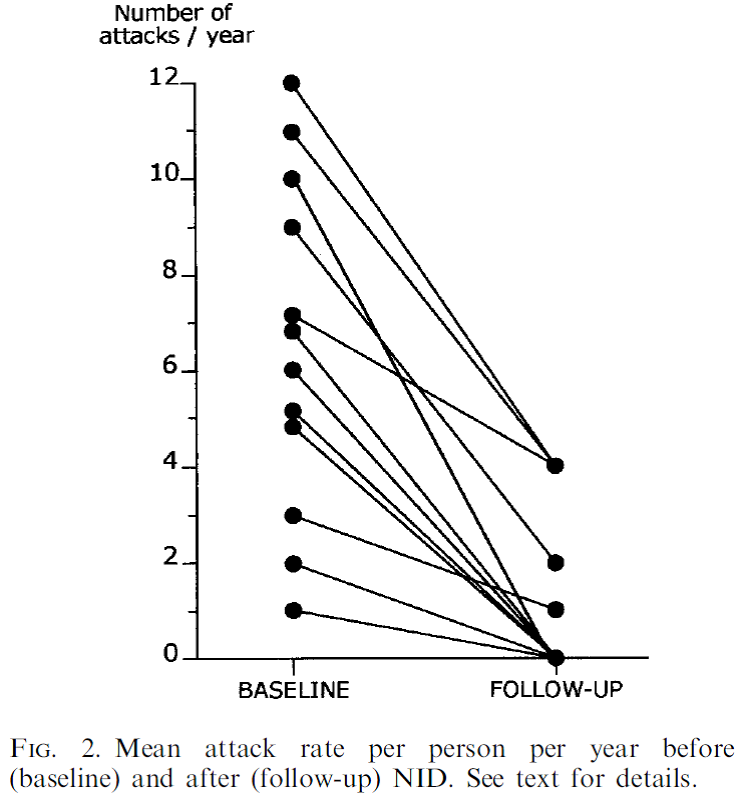
Impressive, no? It certainly looks like iron is one of the factors involved in attacks of gout. Although the author of the study, Dr. Francesco Facchini of Stanford University, stated that it would be “premature” to suggest phlebotomy as a treatment for gout, he wrote that “there is an urgent need to overcome the dogmatic credence that appreciable amounts of iron should always be maintained in storage at any age and by all means.”
In other words, at least in the case of gout, along with many other conditions, higher levels of stored iron are not necessarily better, and may in fact be much worse.
Chronic Obstructive Pulmonary Disease and Cystic Fibrosis
Chronic obstructive pulmonary disease (COPD) is characterized by poor airflow in and out of the lungs, and the most common symptoms are shortness of breath, sputum production, and chronic cough. Symptoms typically worsen over time. The most common cause of COPD is cigarette smoking, and an estimated 5% of the world's population has it to some degree.
So, if it's caused mainly by smoking cigarettes, how in the world could iron be involved?
It turns out that tobacco is loaded with iron.88lxxviii Someone who smokes one pack of cigarettes a day can inhale about one microgram of iron per day, and macrophages (immune cells) in the lungs of smokers can contain as much as six times the amount of iron as in non-smokers. Iron could be one of the most important toxic compounds in cigarette smoke.
A study using mice found that those animals that lacked a certain protein involved in iron metabolism, IRP2, which is also elevated in the lungs of humans with COPD, were completely protected from damage by cigarette smoke.89lxxix
Furthermore, mice that were given an iron chelator to remove iron, or mice that were fed a low-iron diet, were also protected from damage to their lungs by cigarette smoke.
The fact that mice were protected from smoke damage by a low-iron diet is particularly important. Because iron in COPD is inside lung cells, it doesn't necessarily follow that less dietary iron will decrease it in lung cells. But in this case, it did.
Whether lowering iron will be of benefit in humans with COPD, or whether it will merely prevent it, as it appears it will, is another question. It's possible that the damage has been done and that lowering iron won't help.
But I know that if I had COPD I would certainly look into lowering my iron. It's a treatment with a very low risk / benefit ratio, i.e. in most cases there's no harm i90n trying, and great benefit if successful.
Iron is also involved in the lung disease cystic fibrosis, in which most of the pathology involves infection of the lungs with a number of different types of bacteria.lxxx High amounts of iron are found in the airways in cystic fibrosis, and disease-causing bacteria require iron for their growth and the ability to invade healthy tissue. What appears to be happening is that excess iron accumulates in the cells lining the airways, which then seeps out into the airway fluids. Bacteria then have all the iron that they need to grow and multiply.
In normal airways, not enough iron is available for invasive bacteria to gain a foothold.
In cystic fibrosis, whole-body iron overload is not the problem; rather, a genetic defect results in excess iron in the airways. This fact opens the way for the use of iron chelators to mop up excess iron, remove it from airways, and deny the use of iron to invading pathogens.
Liver Disease9192
Liver disease can be caused by excessive alcohol consumption, hepatitis viruses, and many other things. Hemochromatosis, or hereditary iron overload, is one of those other causes. Could iron be involved in other cases of liver disease?93
Non-alcoholic fatty liver disease (NAFLD) affects up to 30% of people in the Western world, and is strongly associated with obesity, insuli94n resistance, and diabetes. Iron in the liver may be elevated in many cases.lxxxi Phlebotomy, which lowers iron, improves insulin sensitivity in NAFLD, as well as markers of liver damage.lxxxii
Although the role of iron in NAFLD remains controversial, it's clear that a sizable fraction of patients have iron overload in the liver, and that lowering it may improve their condition. Some researchers have called for mo95re extensive study of phlebotomy for this condition.lxxxiii
Liver disease caused by hepatitis can be ameliorated by phlebotomy, and iron is considered a “co-morbid” factor in chronic viral hepatitis.lxxxiv96
In a group of patients with viral hepatitis who had phlebotomy such that their iron levels dropped to a very low level (10 ng/ml ferritin) and who were maintained that way for five years, disease progression was much lower.lxxxv
A group of patients with chronic hepatitis C who received phlebotomy and who were instructed to follow a low-iron diet were foll97owed for a number of years, and were compared to a group who declined iron reduction therapy. After ten years, 39% of the98 group that had declined iron-reduction therapy had developed liver cancer; only 8.6% of the iron-depletion group developed liver cancer, for a reduction of risk of 43% after adjustment for other factors.lxxxvi
That's a huge risk reduction. It seems clear that iron is highly involved in the progression of chronic liver disease caused by hepatitis C to liver cancer, and that lowering iron via phlebotomy radically reduces the risk.
Chronic ingestion of large amounts of alcohol causes alcoholic liver disease. Strange to say, but iron is also involved in this.lxxxvii Alcoholism is associated with increased iron in the liver, and alcohol and iron act synergistically to damage the liver.lxxxviii Alcoholics have greatly increased iron absorption, which leads to iron overload.99
Iron chelators have been suggested in the treatment of alcoholic liver disease. It seems likely that merely decreasing iron in alcoholics could substantially improve their health.
In laboratory animals, a type of liver failure induced by carbon tetrachloride is widely used as a model of liver failure. In one such experiment, the animals were divided into groups, and one group was treated with n-acetylcysteine (a cysteine pro-drug) and an iron chelator. This group had a survival rate from liver failure of 80%, compared to only 5% in the rats who got neither.lxxxix
In many or most cases of liver disease, iron is at least a co-factor. This raises the idea that lowering iron stores or preventing increased iron could help treat liver disease.
For someone with liver disease, the first step is to eliminate the cause, which may be excessive sugar or carbohydrates in NAFLD, or alcohol in alcoholic liver disease. In viral hepatitis, eliminating the cause may not be possible.
After taking care of the main or putative cause, lowering iron could be the next step. It's what I would do. Patients with liver disease can't donate blood, but natural or synthetic iron chelators, blocking iron absorption from the diet, or if a doctor is willing, therapeutic phlebotomy, are all options.
Frailty and other conditions of aging
As humans age, many of their organs and tissues seemingly wear out or become much less functional with 100age. Besides the brain, which we covered in a previous chapter, these tissues and organs include the skeletal muscles and bone.
As we get older, we lose muscle, and this starts to occur as early as the decade of the thirties. When muscle loss goes on long enough, it becomes sarcopenia, 101or muscle wasting, and it affects every aspect of life. Elderly people with sarcopenia become frail and often dependent on others for help in daily life. They often fall and injure themselves merely because they have difficulty walking or even holding themselves up.
The accumulation of iron in muscle tissue contributes wholly or partially to the genesis of sarcopenia.xc Iron in 102muscle damages the mitochondria, the cells' powerhouses, and leads to atrophy and decay of the muscle via oxidative damage. Calorie restriction, which as we saw in a previous chapter hinders the accumulation of iron, also protects against sarcopenia.
In laboratory rats, the accumulation of iron in muscle happens side by side with atrophy (wasting), and calorie restriction protects against iron accumulation.xci In these same rats, calorie-restricted animals also retained a greater grip strength into an older age than animals that fed freely. Hence it's clear that iron is involved and perhaps required in the pathogenesis of sarcopenia, and that impeding iron accumulation can prevent it.
In a group of Korean women, high ferritin (iron) levels were associated with nearly double the risk of sarcopenia.xcii
Sarcopenia is strongly associated with disuse, and exercise, especially strength training, potently prevents sarcopenia – use it or lose it. One of the biochemical abnormalities associated with muscle disuse is the dysregulation of iron metabolism, allowing iron to “escape” from its normal locked-down status to become free iron, and damage muscle cells.
Preventing or fixing the accumulation of iron may stop muscle wasting.103
Osteoporosis104
Very high iron load as seen in the condition of hemochromatosis (hereditary iron overload) or in patients who have received numero105us transfusions is a risk factor for osteoporosis, the pathological thinning of bones.xciii What we would really like to know is whether iron levels that are high but within the normal range also predispose to osteoporosis.
The issue isn't simple. While older women have up to a 50% rate of osteoporosis, men have a much lower rate, around 20%, and men have higher iron stores than women. But there could be protective factors in men, such as male sex hormones or greater bone mineral density to begin with, or women may have a combination of factors, such as low estrogen combined with increased iron. xciv
Higher iron levels in laboratory animals (rats) causes thinning of bones, and chelating the iron (removing it) makes bones strong.xcv
It's likely that higher iron levels in post-menopausal women plays a role in the development of osteoporosis, but more research is needed.106
Skin wrinkles
The skin of old people becomes wrinkled, and old people also have higher levels of iron. Is there a connection? Yes – of course!
A group of researchers looked at a group of 12 women, all Caucasian, half of them pre-menopausal, average age 42, half of them post-menopausal, average age 59. They took skin biopsies, and measured ferritin (iron) and antioxidant capacity in the skin.xcvi
In the post-menopausal women, ferritin levels were 42% higher than in the pre-menopausal women. Antioxidant capacity was 45% lower in the post-menopausal women. Very straightforward.107
After menopause, women no longer lose large amounts of iron through menstrual blood flow. The iron then begins to build up in their bodies until, after a couple decades or so, iron levels begin to approach that of men.
Their rates of heart disease, cancer, and diabetes also rise.
Their skin becomes more wrinkled. Oxidative damage is a prime cause of skin wrinkling. This study shows that the buildup of iron in the women’s bodies also includes the skin. Normally, the skin doesn't contain much iron, but a general buildup of iron in the body “spills over” into the skin. Antioxidant capacity in the skin is lower probably precisely because iron is higher. The antioxidant system becomes overwhelmed by highly reactive iron and a state of oxidative stress in the skin comes into being.
Damage including wrinkles results.
Importantly for this study, the measure of iron was ferritin, not free iron. The body strives to keep free iron under control by locking it down in the ferritin molecule, as free iron is a dangerous reactant. In this case, the fact that ferritin went up shows the association between it and free iron: the more ferritin, the more free iron. They are closely correlated in otherwise healthy people.
The addition of ultraviolet (UV) radiation from the sun to iron-loaded skin causes even more oxidative damage. When UV radiation from the sun hits skin cells, it causes degradation of the safe-storage ferritin molecule and the release of free iron, causing oxidative damage to the skin; in fact, this is probably the main way that the sun inflicts damage to skin.108xcvii Iron chelators – chemicals that remove iron from the body – actually protect cells from solar radiation da109mage.xcviii
Release of iron in the skin after sun exposure could also be a prime mechanism in the development of skin cancer.
Since solar radiation causes the release of free iron from ferritin, then the best way to ensure against skin damage from the sun is to have low ferritin in the first place so less free iron is released. So in the case of wrinkled or damaged skin, the same methods for lowering iron that prevent or treat other conditions work here.
Topical iron chelators, which remove iron from the skin, may be useful in combating wrinkles, although keeping body iron levels from becoming elevated and thus preventing wrinkles in the first place is a better strategy. Whether lowering iron in the skin either directly with topical chelators or indirectly by whole-body lowering would help already wrinkled skin isn't known just now, but I would certainly give it a try.
Kojic acid is a naturally derived agent that is used in skin-lightening soaps and cremes, and it reportedly actually works. It also chelates iron, removing it from the skin, and this may have a lot to do with its effects. Whether it also removes wrinkles - well, give it a shot and report back.
Oral contraceptives
Oral contraceptives – birth control pills – are associated with higher risks of thrombosis (blood clots), cancer, and heart attack. For instance, studies have found as much as a 3.5-fold increase in the risk of thrombosis.110xcix A 50% increase in the rate of breast cancer has been found in long-term oral contraceptive us111ers.c
Oral contraceptives greatly decrease the amount of a woman's menstrual blood flow, in some cases cutting it nearly in half.112ci This leads to much higher iron levels in women who use the113m.cii
Is increased iron behind the increased health risks of birth control pills? That wouldn't be surprising, yet no one ever discusses the possibility. Why no discussion?
As stated before, scientists and doctors become very enamored of their theories and can be reluctant to give them up, even in the face of compelling evidence. In this case, iron is such a simple story that it would invalidate years of research.
Birth Defects
Could iron cause birth defects?
Weeks 3 to 8 of human pregnancy make up the embryonic period. During this time, the mother absorbs 30% less iron than needed, suggesting a mechanism to limit iron. Iron also strongly promotes morning sickness, which suggests that the mother and fetus are trying to get rid of it.114ciii
In mice during early pregnancy, iron causes birth defects.
All of this is merely suggestive, but the author of the cited article argues that pregnant women should be tested for ferritin and not supplemented if the level is high enough, and that if needed, supplementation should wait until after week 8 of pregnancy.
Iron and Animals: Is Commercial Pet Food Killing Your Pets?
In the course of my research on iron, aging, and disease, I intervie115wed Dr. Eugene D. Weinberg, emeritus professor of microbiology at Indiana University, whose life work concerns the biological actions of iron, on which he's published more than 140 scientific papers. He kindly wrote a preface to this book.
Dr. Weinberg mentioned to me, totally in passing, that many commercial pet foods contain seriously high amounts of iron. I'm sure hardly anyone else in the world knows this, and if anyone knows, that person would be Dr. Weinberg.
I set out to discover the facts behind his assertion. Information on the amount of iron in commercial pet foods is very difficult to find.
However, in the course of reading a scientific paper on iron metabolism, I came across the statement that, while laboratory mice are estimated to have an iron requirement of 35 ppm (parts per million) of their diet, some laboratory mouse chow contains 10 times that amount.civ This is an astonishing statement, because if scientists experiment with mice, and feed them toxic levels of iron, that might invalidate many of their results.
LabDiet, “the world leader in laboratory animal nutrition”, has a mouse diet, and the company provides a detailed analysis of its content.cv Iron is listed at 200 ppm. In this case, that's about 6 times the requirement of mice – not 10 times, but close enough – which is still more than enough to cause iron overload in animals that eat it.
The iron requirement for both cats and dogs has been estimated at 80 ppm.cvi LabDiet also makes a feline diet, and their analysis states that it contains 290 ppm, or about 3.6 times the requirement.cvii As an animal ages, this amount of iron will produce iron overloading. 116Well, I suppose lab cats aren't destined to live long anyway, poor animals.
If LabDiet, a company which presumably takes great pains to ensure proper nutrition in animals, loads their mouse and cat diets with iron,117 do commercial pet food companies load dog and cat food with iron also?
Unfortunately, I was unable to find an analysis as detailed as the mouse 118diet for dog and cat food. (Maybe they don't want you to know; one major pet food company did not return my calls and emai119ls.) But I did find that most of them have been fortified with iron. Purina Dog Chow is fortified with ferrous sulfate, a form of iron, and Blue Buffalo dog food is fortified with iron amino acid chelate, another form. AAFCO, a consortium of government officials involved in animal feed, previously stated that a maximum of 3000 ppm iron was acceptable in dog food, but this statement was rescinded, and now any maximum amount is apparently acceptable.cviii Note that this is 37.5 times the iron requirement of dogs.
Now, humans shouldn't take iron supplements unless there's a demonstrated need and a doctor advises it. Yet our pets are eating iron-supplemented food all the time, though how much iron they get and how iron-overloaded they become isn't known at this point – but it seems to be a lot.
Iron overload due to pet food loaded with toxic amounts of iron could be killing pets or making them die before their time. That's not only possible, but in my opinion probable.120
How long are dogs and cats supposed to live?
The natural lifespan of a cat is allegedly about 15 years, but perhaps that figure is skewed downward by bad food. In other words, maybe 15 years is the “unnatural” lifespan caused by eating toxic amounts of iron in commercial pet food.
Consider the case of Creme Puff, the world's longest lived cat, who lived to the age of 38, well beyond the age most cats live.cix When most people learn about Creme Puff, they figure, like I did, that her long life must have been some kind of fluke, perhaps genetic. But then one learns that the same man who owned Creme Puff also owned another, unrelated cat, Grandpa, who lived to the age of 34. Clearly, this man must have been doing something right for his cats. Two very long-lived and unrelated cats in the same household doesn't look like a fluke, but must be related to their environment.
One thing their owner did right was that he didn't feed them commercial pet food. He fed them bacon and eggs, coffee and cream,121 and vegetables. His cats didn't become iron-loaded from commercial pet food – at least I think that's a likely possibility for the long life of his cats.
Pets have been getting fatter at the same time that humans have. Many have blamed the carbohydrates in commercial pet food for pet obesity, and that may very well be a contributor, but iron could play a role there too. Cats often get diabetes and kidney failure, both conditions that are associated with iron overload (among other things). Dogs get cancer, in which iron is also a factor.
Whether iron overload is a major problem for dogs and cats is necessarily speculative, as it appears that hardly anyone has looked into this issue. Just as with humans, the dangers of iron are largely overlooked or unappreciated. I think it is a distinct possibility, and that without iron-loaded commercial pet food, dogs and cats might live considerably longer and healthier than they do now. I've already stopped feeding commercial cat food to my cat.
Takeaway points
Iron is involved in many other diseases, including infections, multiple sclerosis, gout, liver disease, cystic fibrosis, COPD
Iron may be the mechanism behind health risks of birth control pills
Iron might cause birth defects
Iron-fortified pet food could be causing iron overload and early death in cats and dogs
References
- Weinberg, Eugene D. "Iron availability and infection." Biochimica et Biophysica Acta (BBA)-General Subjects 1790.7 (2009): 600-605. ↩
- Weinberg, Eugene D. "Iron loading and disease surveillance." Emerging infectious diseases 5.3 (1999): 346. ↩
- Azar, Sima Abedi, and Mohammad Reza Jafari Nakhjavani. "The effect of intravenous iron on bacterial infection in hemodialysis patients." Life Science Journal 12.3s (2015). ↩
- Bullen, John, et al. "Sepsis: the critical role of iron." Microbes and infection 2.4 (2000): 409-415. ↩
- Zager, Richard A., Ali CM Johnson, and Sherry Y. Hanson. "Parenteral iron therapy exacerbates experimental sepsis Rapid Communication." Kidney international 65.6 (2004): 2108-2112. ↩
- Islam, Sufia, et al. "Anti-inflammatory and anti-bacterial effects of iron chelation in experimental sepsis." Journal of Surgical Research 200.1 (2016): 266-273. ↩
- Osthoff, Michael, et al. "Low-Dose Acetylsalicylic Acid Treatment and Impact on Short-Term Mortality in Staphylococcus aureus Bloodstream Infection: A Propensity Score-Matched Cohort Study." Critical care medicine(2016). ↩
- Singh, Ajay Vikram, and Paolo Zamboni. "Anomalous venous blood flow and iron deposition in multiple sclerosis." Journal of Cerebral Blood Flow & Metabolism 29.12 (2009): 1867-1878. ↩
- http://yourmedicalguide.info/italian-doctor-may-have-found-surprisingly-simple-cure-for-multiple-sclerosis/ ↩
- Facchini, Francesco S. "Near-iron deficiency-induced remission of gouty arthritis." Rheumatology 42.12 (2003): 1550-1555. ↩
- Weinberg, E. D. "Tobacco smoke iron: an initiator/promoter of multiple diseases." Biometals 22.2 (2009): 207-210. ↩
- Cloonan, Suzanne M., et al. "Mitochondrial iron chelation ameliorates cigarette smoke-induced bronchitis and emphysema in mice." Nature medicine (2016). ↩
- Reid, David William, Greg J. Anderson, and Iain L. Lamont. "Role of lung iron in determining the bacterial and host struggle in cystic fibrosis." American Journal of Physiology-Lung Cellular and Molecular Physiology 297.5 (2009): L795-L802. ↩
- Bugianesi, Elisabetta, et al. "Relative contribution of iron burden, HFE mutations, and insulin resistance to fibrosis in nonalcoholic fatty liver." Hepatology 39.1 (2004): 179-187. ↩
- Valenti, Luca, et al. "A randomized trial of iron depletion in patients with nonalcoholic fatty liver disease and hyperferritinemia." World journal of gastroenterology: WJG 20.11 (2014): 3002. ↩
- Garg, R., Z. Goodman, and Z. Younossi. "Commentary: phlebotomy in non‐alcoholic fatty liver disease." Alimentary Pharmacology & Therapeutics 37.11 (2013): 1112-1112. ↩
- https://www.ncbi.nlm.nih.gov/pubmed/11808931 ↩
- Yano, Motoyoshi, et al. "Long term effects of phlebotomy on biochemical and histological parameters of chronic hepatitis C." The American Journal of Gastroenterology 97.1 (2002): 133-137. ↩
- Kato, Junji, et al. "Long-term phlebotomy with low-iron diet therapy lowers risk of development of hepatocellular carcinoma from chronic hepatitis C." Journal of Gastroenterology 42.10 (2007): 830-836. ↩
- Kohgo, Yutaka, et al. "Iron accumulation in alcoholic liver diseases." Alcoholism: Clinical and Experimental Research 29.s2 (2005): 189S-193S. ↩
- Irving, Michael G., June W. Halliday, and Lawrie W. Powell. "Association between alcoholism and increased hepatic iron stores." Alcoholism: Clinical and Experimental Research 12.1 (1988): 7- 13. ↩
- Ritter, Cristiane, et al. "Protective effect of N-acetylcysteine and deferoxamine on carbon tetrachloride-induced acute hepatic failure in rats." Critical Care Medicine 32.10 (2004): 2079-2083. ↩
- Marzetti, Emanuele, et al. "Sarcopenia of aging: underlying cellular mechanisms and protection by calorie restriction." Biofactors 35.1 (2009): 28-35. ↩
- Xu, Jinze, et al. "Iron accumulation with age, oxidative stress and functional decline." PLoS One 3.8 (2008): e2865-e2865. ↩
- Kim, Tae Ho, Hee-Jin Hwang, and Sang-Hwan Kim. "Relationship between serum ferritin levels and sarcopenia in Korean females aged 60 years and older using the fourth Korea National Health and Nutrition Examination Survey (KNHANES IV-2, 3), 2008-2009." PloS one 9.2 (2014). ↩
- Weinberg, Eugene D. "Iron loading: a risk factor for osteoporosis." Biometals 19.6 (2006): 633-635. ↩
- Jian, Jinlong, Edward Pelle, and Xi Huang. "Iron and menopause: does increased iron affect the health of postmenopausal women?." Antioxidants & redox signaling 11.12 (2009): 2939-2943. ↩
- Liu, Gang, et al. "Therapeutic effects of an oral chelator targeting skeletal tissue damage in experimental postmenopausal osteoporosis in rats." Hemoglobin 32.1-2 (2008): 181-190. ↩
- Dunaief, Joshua L. "Iron induced oxidative damage as a potential factor in age-related macular degeneration: the Cogan Lecture." Investigative ophthalmology & visual science 47.11 (2006): 4660-4664. ↩
- Pelle, Edward, et al. "Menopause increases the iron storage protein ferritin in skin." Journal of cosmetic science 64.3 (2012): 175-179. ↩
- Pourzand, Charareh, et al. "Ultraviolet A radiation induces immediate release of iron in human primary skin fibroblasts: the role of ferritin." Proceedings of the National Academy of Sciences 96.12 (1999): 6751-6756. ↩
- Bissett, Donald L., Ranjit Chatterjee, and Daniel P. Hannon. "Chronic ultraviolet radiation‐induced increase in skin iron and the photoprotective effect of topically applied iron chelators 1,*." Photochemistry and Photobiology 54.2 (1991): 215-223. ↩
- Stegeman, Bernardine H., et al. "Different combined oral contraceptives and the risk of venous thrombosis: systematic review and network meta-analysis." Bmj 347 (2013): f5298. ↩
- Beaber, Elisabeth F., et al. "Oral contraceptives and breast cancer risk overall and by molecular subtype among young women." Cancer Epidemiology Biomarkers & Prevention 23.5 (2014): 755-764. ↩
- Larsson, Gerd, et al. "The influence of a low-dose combined oral contraceptive on menstrual blood loss and iron status." Contraception 46.4 (1992): 327-334. ↩
- Milman, N., M. Kirchhoff, and T. Jørgensen. "Iron status markers, serum ferritin and hemoglobin in 1359 Danish women in relation to menstruation, hormonal contraception, parity, and postmenopausal hormone treatment." Annals of Hematology 65.2 (1992): 96-102. ↩
- Weinberg, E. D. "First trimester curtailment of iron absorption: Innate suppression of a teratogen?." Medical hypotheses 74.2 (2010): 246-247. ↩
- Naieni, Farahnaz Fatemi, et al. "Serum iron, zinc, and copper concentration in premature graying of hair." Biological trace element research 146.1 (2012): 30-34. ↩
- Ganz, Tomas, and Elizabeta Nemeth. "Hepcidin and iron homeostasis." Biochimica et Biophysica Acta (BBA)-Molecular Cell Research 1823.9 (2012): 1434-1443. ↩
- http://www.labdiet.com/cs/groups/lolweb/@labdiet/ documents/web_content/mdrf/mdi4/~edisp/ducm04_028438.pdf ↩
- Naigamwalla, Dinaz Z., Jinelle A. Webb, and Urs Giger. "Iron deficiency anemia." Can Vet J 53.3 (2012): 250-256. ↩
- http://www.labdiet.com/cs/groups/lolweb/@labdiet/ documents/web_content/mdrf/mdi4/~edisp/ducm04_028202.pd f ↩
- http://www.aafco.org/Portals/0/SiteContent/Regulatory/ Committees/Pet-Food/Reports/Pet_Food_Report_2013_Midyear- Proposed_Revisions_to_AAFCO_Nutrient_Profiles.pdf ↩
- https://en.wikipedia.org/wiki/Creme_Puff_(cat) ↩
Keep going past iron
Iron is one lever, not the whole machine. P. D. Mangan writes every week about the rest of it: training, protein, insulin, sleep, and the research as it lands.
No charge, and you can unsubscribe at any time. You can also follow P. D. Mangan on X.