7 · How to Take Control of Your Iron
A few easy steps to better health
The evidence set forth in this book shows that avoiding excess iron in the body is not only a worthwhile thing to do for health, but even crucial.
Lower iron (but not iron deficiency) means less cancer, heart disease, diabetes, frailty, and brain disorders. Inhibition of iron increases lifespan in lab animals, and ought to do so in humans.
I had my own ferritin measured not long ago. It was 137, a level I consider too high and that puts my health at risk. I already have most of my health risks covered: I exercise, eat right, and stay lean. But having a high iron (ferritin) could offset the health benefits of diet and exercise, and if high enough, could negate them entirely.
Furthermore, preventing or fixing excess iron is not terribly difficult. A few easy steps and you could be on your way to much better health.
Doctors and most mainstream health advice will not tell you about the dangers of excess iron, because they don't know about it, and they care even less. On top of that, doctors routinely prescribe iron supplements to their patients even without demonstrated iron deficiency. Many people – about 15% of adults – take them on their own because they believe it's a healthy thing to do.
Doctors do know all about hemochromatosis, or hereditary iron overload, as this is a well-known condition that, if untreated, can result in cancer, liver disease, and early death. But in hemochromatosis, iron levels are sky high, much higher than the levels that we've been discussing in this book for their ability to cause disease. Hemochromatosis is hard to overlook, given some straightforward lab tests.
If you see your doctor and for one reason or another get your iron level tested, unless the result is clearly abnormally high, your doctor will very likely not believe that it's a problem and will take no action.
With that in mind, let's take a look at what a normal, that is, healthy, iron level is, and at what level of increase it starts to cause health problems.
Normal iron: what it is and isn't
The most common laboratory test for iron is the ferritin test, and from here on, I will be using this term as a synonym for body iron stores. (It's slightly more complicated than that, but is perfectly acceptable for our purposes.)
Ferritin is a protein that the body uses to sequester iron. Since iron is a reactive metal, the body strives to keep iron well under control by forming a complex of it with other molecules, and ferritin is the most important iron storage molecule.
Hemoglobin, however, contains most of the body's iron, around 80% of it. Hemoglobin is the molecule used by red blood cells to carry oxygen to the body, and iron is necessary for this function. The most important consequence of iron deficiency is an insufficient amount of hemoglobin.
Iron is also used in other crucial functions, such as energy generation and detoxification.
When the need for iron by hemoglobin and other molecules is satisfied, and more iron is ingested, it is stored as ferritin.
Normal laboratory values
If your doctor orders a ferritin test – or you get him or her to order it for you – the result will be accompanied by a so-called “normal range”, also called a reference range or normal laboratory values. The normal range is calculated such that 95% of apparently healthy people have a value within that range.
For ferritin, the Mayo Clinic states that a typical reference range is 11 to 307 ng/ml for women, and 24 to 336 for men. If a ferritin value is lower than the lower limit of the reference range, a patient may be iron deficient, and above that may have iron overload.
Absent clear symptoms of deficiency or overload, a doctor is unlikely to take any action if a ferritin test value falls within the normal range. In fact, most doctors are unlikely to take even a second glance at any test whose value is not clearly abnormal.
But since iron is an under-recognized factor in disease risk, as I've argued in this book, many people whose ferritin falls within the normal range have, in reality, a value that is too high.
Besides ferritin, there is no other lab test that I'm aware of whose normal value spans more than a ten-fold range from low to high. The Mayo Clinic reference range cited above spans a 14-fold range for men, and nearly 28-fold for women. The reference ranges of most lab tests span far less, depending on the particular test, for example a range of 1.5 (potassium) to 3.0 (creatinine) from low to high.
Normal lab values for any substance of interest, including ferritin, are, as mentioned, calculated from the values that 95% of apparently healthy people have. But two thirds of the population are overweight or obese, many have unrecognized blood sugar or other metabolic problems, and most don't exercise or care about what they eat; in short, laboratory normal values are calculated for unhealthy people. Many of the apparently healthy people whose test results are within the normal range are at great risk of cancer and heart disease. If you are careful about your health, you need to do a lot better than the lab normal range, and find out what the optimal values are.
The conclusion is that the normal ranges are not normal. Disease risk from iron begins, depending on the disease, at levels within the normal range. Therefore, for optimal health, you must disregard the normal range.
The optimal level of iron
Based on the considerations above, suppose you're an adult man, get a ferritin test, and the result is 200 ng/ml, which is within the normal range. You ask your doctor about it, and he or she says that there is no cause for concern. Should you be concerned? What is an optimal level of ferritin anyway?
A large body of evidence shows that health benefits accrue by lowering ferritin starting from the upper limits of the reference range down to just above the minimum needed to prevent iron deficiency.122cx
A study in Korea found that men in the highest quartile (fourth) of ferritin levels had nearly double the risk of developing type 2 diabetes as men in the lowest. The upper quartile represented a ferritin of 284 or higher. Importantly, risk of diabetes increased from the lowest level, that is, risk rose as ferritin rose.123cxi All within the normal range.
A meta-analysis of five studies found that, for women, risk of diabetes increased at threshold ferritin levels of between 86 and 150, and for men, between 184 and 300.124cxii Note that all of these values are within the normal range.
Men who had ferritin levels greater than 300 were nearly five times more likely to be diagnosed with diabetes. For women, having a ferritin greater than 150 increased the likelihood of a diabetes diagnosis 3.6 times.125cxiii All within the normal range.
In men, increased risk of having coronary artery calcification was seen at a ferritin greater than 257. This is within the normal range. (Tired of reading that yet?)126
In women, ferritin greater than 137 was associated with increased risk of stroke.cxiv
In healthy men, increased ferritin meant more oxidative stress and insulin resistance. An important point about this study is that, not only were these markers of worse health seen in men with normal ferritin values, but that they increased continuously from the lowest third (<97) to the highest (>180).127
One piece of evidence shows that reducing iron stores down to a very low level has benefits compared to those who already have a low ferritin. This evidence concerns blood vessel function, in particular something called flow-mediated dilation. The decline in this function is closely linked to atherosclerosis, the narrowing of the arteries, and high flow-mediated dilation means that blood vessels are in a more youthful and healthy state. Two groups of blood donors were compared, high-frequency donors, who had donated at least eight times in the previous two years, and low-frequency donors, who had donated no more than once in each of the previous two years. The high-frequency donors had an average serum ferritin level of 17, which is quite low, and the low-frequency donors an average of 52, still quite low when compared to population averages. Flow-mediated dilation in high-frequency donors was much better than in low-frequency, about 44% better.cxv
The point is clear: iron overload that has adverse health effects begins at a much lower level than most doctors believe, a level within the “normal” range.128
The reader might also wonder that since the studies I've cited reveal only associations, they don'129t show cause and effect. Maybe it's just a coincidence that higher levels of ferritin are associated with worse health, which is caused by something else and only coincidentally raises iron in the body.
In opposition to the idea that it's all just a coincidence, a number of studies show improved health or lower risk of disease when iron is lowered. Some of these have already been discussed previously, for instance, cancer risk was 40% lower and death from cancer 60% lower in men who underwent phlebotomy (bloodletting) to lower their iron, as opposed to men who did not.cxvi
Reducing ferritin through phlebotomy lowers insulin resistance, an important marker of ill health.cxvii The same subjects had increased HDL cholesterol, lower triglycerides, lower blood pressure, which represent improvements in cardiovascular disease risk.
It is not all just a coincidence. Ferritin levels that are capable of harming health can fall within the normal range.
What remains to be determined is the optimal level of ferritin. The answer to this question is necessarily somewhat speculative, but we can arrive at a decent estimate.
Low iron and iron deficiency
It's worth reiterating that iron is a required nutrient and that it's possible to become deficient in it, which can lead to anemia, fatigue, and other health problems.
Iron deficiency should be avoided. At what level of ferritin does a human become deficient?
The normal ranges for ferritin are actually a decent guide in the matter of iron deficiency. Historically, iron deficiency has been a much bigger problem than iron overload, so it's been studied extensively and doctors are very aware of it.
Therefore, a ferritin level of less than 20 should be avoided. Since this is not an absolute number applicable to everyone, staying above that value by perhaps 10 points may be a good idea.130
Many of the studies on phlebotomy to lower iron levels used periodic blood withdrawal, calibrated to the individual patient, to drop ferritin levels to “near iron deficiency”, a level just above that which would cause deficiency. For instance, in the study on insulin sensitivity, after the course of periodic phlebotomy, the subjects average ferritin level was 13, which is very low indeed.
The benefits of lower ferritin increase all the way down until iron deficiency develops. Barring deficiency, it appears that the lower, the better.
A review of this issue concluded that optimum adult ferritin values are in the range of 20 to 40 for women, and 50 to 70 for men. Within these ranges, both iron deficiency and iron overload can be avoided.cxviii
These ranges are narrow, much more so than actual “normal ranges” that clinical laboratories use. In particular, the upper limit is much lower.
How to control your iron level
Lowering your iron stores, or preventing the rise of high iron in the first place, can be done a number of ways.
As iron is necessary for growth and development, lowering iron stores is not for children, adolescents, and pregnant women. Fertile (that is, pre-menopausal) women are unlikely to need to lower iron, as blood loss from the menstrual cycle keeps iron naturally low. As we've seen, the average ferritin level of a fertile woman is around 35 ng/ml, and this is a safe level that does not promote disease or aging.
In men, iron levels start to rise at about the age of 19, and by the decade of their thirties they usually have far more iron than women the same age. In women, iron starts rising after menopause (or hysterectomy), and slowly rises toward that of men, although on average they never catch up.
Before undertaking any intervention to lower iron, you should know your ferritin and hemoglobin numbers. Both of these are common lab tests performed by almost all clinical labs, but they require a doctor's orders. Hemoglobin is a part of a test panel known as a CBC (complete blood count), and doctors often order a CBC on patients as part of an annual physical or checkup. In addition, they often order a CBC test panel on any patient that has any illness other than a minor one.
Doctors do not routinely order ferritin tests, usually doing so only in cases of suspected iron deficiency or overload, or to rule out these conditions, so you may have to ask for one.
If you don't know your ferritin and hemoglobin numbers, you can still use some of the techniques below to lower your iron.
However, if your ferritin is very high, say from 300 to over 1000, you will need a concerted effort to get your iron down to a low, safe level. If you don't know that number, you won't have any idea of how much you should do in the way of iron-lowering interventions. So you want to know. You shouldn't, after reading this book, just consider drinking some tea with your meals or taking a supplement or two and think that all will be well. If your iron is very high, all will not be well.
If after getting your ferritin tested and it's over 300, you should periodically get retested to monitor your iron level and see how well your iron-lowering interventions are working. If it is that high, your doctor may be interested in working with you to lower it.
If your ferritin level is low, in the range we discussed (20 to 40 for women, 50 to 70 for men), then practicing any of the interventions discussed below could put you at risk for iron deficiency, so that's another reason to know your iron level.
The risk of iron deficiency is low even if you have a low normal ferritin because, if low iron leads to low hemoglobin (anemia), you will not be eligible to donate blood, which eliminates the major means of lowering iron. When it comes to donating blood, there's a feedback loop: if your hemoglobin, and thus iron, drops too low, you can't donate.
There are four ways to lower iron levels or to prevent iron accumulation:
Blood donation
Iron chelation
Inhibition of iron absorption from food
Low-iron diet
Blood donation
Donating blood at the Red Cross or other blood banks is the surest, most effective, and fastest method of lowering iron. Whole blood or red cell donations are the only types that lower iron, as most iron is found in red blood cells, not plasma or platelets. Plasma or platelet donations have little to no effect in lowering iron.
When someone volunteers to donate blood, the blood bank measures the donor's hemoglobin level during the screening process, and if the hemoglobin level is too low, donation will not be allowed. They do this for the donor's safety, since a blood donation also decreases hemoglobin, and if the donor's hemoglobin is already low, then it could decrease to a low, potentially unhealthy and unsafe level.
Low hemoglobin can be caused by a number of things, one of the most common being iron deficiency. So on the bright side, if your hemoglobin is too low to donate, your iron likely doesn't need to be lowered anyway.
If hemoglobin is within the normal range (which differs between men and women, men having higher hemoglobin), and all other screening factors give the go-ahead signal, then donation proceeds.
Hemoglobin is not iron
Blood bank personnel often have a habit of referring to a donor's hemoglobin number as their iron level. It is not. Hemoglobin is hemoglobin, not ferritin or some other form of iron.
Don't confuse hemoglobin with iron. If the blood bank nurse tells you that your iron is 15 (or some other similar number), that's normal, but does not represent your iron level.
Whole blood and double red cell donations
A whole-blood donation consist of the removal of about 450 milliliters of blood in the U.S., but in some other countries may be 500 ml. Since the average adult human has a blood volume of about 5 liters, a blood donation removes about 10% of one person's total blood supply.
Red blood cells, which hold the iron-containing hemoglobin, generally make up about 40 to 50% of the total blood volume in men, and from 35 to 45% in women. This number is known as the hematocrit, a test which is part of a complete blood count. The remaining blood volume is the liquid portion, known as plasma.
A red cell donation is similar to a whole-blood donation, but in this case only red blood cells are removed via a machine, and plasma is returned to the donor. Red cell donations sometimes come in the form of “double red cell” donations, in which you donate twice the amount of red blood cells as a whole blood donation.
Double red cell donations have the advantage that you rid yourself of iron twice as much with only one donation. They have the disadvantage that they're going to leave you a little fatigued and with lower exercise capacity for longer.
Double red cell donations may be offered to a donor, especially large, healthy men, or you may need to ask for one if you're interested.
Since the total body iron content of an adult man is 3 to 4 grams, and blood contains about 80% of this iron, one whole-blood donation removes roughly 250 mg of iron, depending on the individual. Even a person with a high iron load loses about the same amount, since high iron is a matter of high ferritin, not hemoglobin, and hemoglobin is what's being removed.
After a donation, blood volume recovers fairly quickly, probably in a matter of hours, and less than 24 hours. The Red Cross recommends that donors do no heavy exercise nor drink alcohol on the day of the donation, since a lower blood volume could make these activities less safe.
The loss of red blood cells takes longer to recover from than blood volume. Blood donors must wait a minimum of two months between donations; by this time, red blood cells are fully replenished, although in healthy people with adequate nutrition, the replenishment time is likely much shorter than that.
To replenish red blood cells, the body must make more hemoglobin to put inside those cells. Since iron is required for hemoglobin, the body takes iron from storage, mostly ferritin, and uses it to make hemoglobin. Hence, blood donation lowers iron. For a blood donor, the ferritin value doesn't decline immediately upon donation, but declines as new red cells are made.
Quantifying the effect of blood donation on iron
While a blood donation lowers body iron stores by about 250 mg, we're more interested in its effect on ferritin, since that's the most common measure of iron stores.
A rule of thumb is that one whole-blood donation lowers ferritin by about 30 ng/ml.
Hence if your ferritin was 120 before a donation, around one month after it, it would be about 90.
If multiple donations are made, say several in a year, a couple of different things occur. One is that ferritin levels drop further with more donations; the second is that the body responds to a drop in ferritin by activating hormones that increase iron uptake from food. This makes sense, as the body senses a drop in iron and the need for more, and therefore it ramps up iron intake.
Essentially, with more donations, in terms of lowering iron, you have to run faster to stay in the same place. This doesn't mean there's any problem in lowering ferritin to a low normal range, as we'll see, but lowering it to ultra-low levels and keeping it there may require relatively frequent donations.
To get a handle on how much in the way of blood donation is required to lower iron, look at the following chart from a Danish study on ferritin values in donors, by frequency of donation, and non-donors.
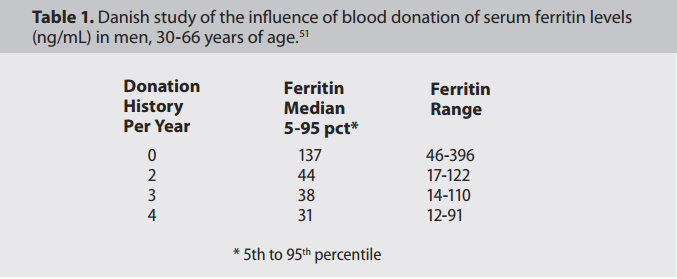
The donors were all men, age 30 to 66, and non-donors had an average ferritin of 137, about the same average seen in the U.S. for adult men.
It can be seen that two donations annually dropped ferritin levels dramatically, while the further drop produced by more than two donations was less dramatic.131
We don't know for how long the men had been donating blood, and previous, recent donations, say in the year prior to the study, would also contribute to lower ferritin. But even at the two donations a year level, the ferritin was solidly within the low normal range that we're striving for.
A study done in the 1970s found that first-time male blood donors, average age in their 30s, had a ferritin of about 127; for females the ferritin was 46. These figures closely track the numbers from other studies concerning average ferritin values in the population. For male donors, one blood donation a year was enough to cut ferritin in half. For females, the result was similar though not as strong, which is to be expected since they had lower iron levels to begin with.
Now, we know that the average fertile woman has a ferritin level of about 35. The average fertile women also loses approximately 35 to 60 ml of blood in her menstrual cycle, or about 420 to 720 ml a year. The first number, 420 ml, is remarkably close to the amount of blood lost in one blood donation, which is 450 ml. The second number is somewhat less than the amount of blood lost in two donations.
Therefore, it follows that, assuming that someone has a relatively normal ferritin to begin with, one blood donation a year may be enough to get it into the low normal range, while two per year would be likely to ensure it.132
The number of blood donations required in getting to that low ferritin value in the first place will vary greatly between individuals. For example, if a man has a ferritin of 300, which is not uncommon, and one donation lowers ferritin by 30 points, then getting to a level of 70 may require up to 7 or more donations. While this looks like a lot, someone who's dedicated to lowering a high ferritin can accomplish this in 14 months, with one donation every two months.
I know of an 89-year-old woman who started donating blood at the age of 50, and who has given blood 110 times – so far. That's about 3 donations each and every year. The world record for blood donations is held by a Florida man, age 78, who's given whole blood 315 times, amounting to almost 40 gallons of blood. It took him 60 years to accomplish this feat.cxix In the photo accompanying the article about him, he looks fantastically fit and healthy too – is donating blood the secret to his good health and youthful appearance? I wouldn't be surprised.
However, if you don't feel quite so zealous about blood donation, one donation a year should be adequate once you've reached the low normal range. This is why you should know your ferritin first, since that gives you an indication of how many donations you'll need to lower your iron.
The Red Cross estimates that only about 38% of the American public are eligible to donate blood, since age, health, and travel history exclude many. Of these, only about 5% actually donate. In case of ineligibility, there are other options for lowering or preventing high iron.
Therapeutic phlebotomy is the withdrawal of blood from the body, and works just like blood donation. The main differences between the two are that therapeutic phlebotomy is a medical procedure specifically designed to lower iron, and the blood is discarded rather than donated.
Therapeutic phlebotomy is normally designated only for those whose medical conditions indicate it, for example hemochromatosis, or hereditary iron overload. Whether a doctor would prescribe it for lowering iron when it is not grossly overloaded isn't clear, but if one were unable to donate blood, it may be worthwhile asking a doctor if this is an option.
Iron Chelators
Chelators are chemicals, either natural or synthetic, that attach to iron, after which the chelators and the iron are excreted from the body.
A number of synthetic iron chelators are available by prescription. However, some can have fairly serious side effects, some require intravenous administration, and doctors normally prescribe them for serious cases of iron overload only. Therefore, for our purposes, they are not under consideration.
A number of natural substances that are known for beneficial health effects also chelate iron, which is probably the main reason that they're healthy in the first place. These substances include:
quercetin
curcumin
inositol hexaphosphate (IP6)
EGCG (from green tea)
theaflavin (from black tea)
All of these are available as relatively inexpensive, over-the-counter supplements.
Quercetin, a flavonoid found in a number of fruits and vegetables, possesses potent iron-chelating activity, and is known to have the ability to cross the blood-brain barrier.cxx To get the potent chelating activity of quercetin, it's necessary to take it in amounts found in supplements, since the amounts in food are small.
Curcumin, which is the active compound found in the spice turmeric, has been found to induce iron deficiency in mice if given long enough.cxxi133
Inositol hexaphosphate, commonly known as IP6, is a constituent of vegetables and grains, and pure IP6 as a supplement is derived from ric134e bran. It has been shown to protect neurons, and has been suggested as a treatment for Parkinson's disease.cxxii It also has anticancer effects against numerous different types of cancer cells, virtually every cancer cell that's been tested, undoubtedly connected to its iron-chelating property.
EGCG from green tea, and theaflavins from black tea, are, while available as supplements, perhaps more interesting for the fact that tea contains them, which is important in inhibiting iron absorption from food, as we'll see below. EGCG has been 135shown to be as potent an iron chelator as the prescription iron chelator desferrioxamine; in addition, it can cross into the brain, and for both these reasons has been suggested as a treatment for Alzheimer's disease.cxxiii
Getting good results136
Most or all of these natural compounds have not undergone clinical trials in humans to determine how well and how much they can remove iron from the body, and their ability to do so is based on experiments using lab animals or cell culture. So there's no hard data on how well they work in people. There are anecdotal reports of people greatly lowering their ferritin levels with some of these compounds, but they are after all just individual stories, so results may vary a lot between different people.
If you use any of these natural compounds for lowering iron, you should therefore monitor your iron levels using periodic ferritin testing to ensure that you get the results you want.
Clinical trials using these iron chelators are not likely to happen any time soon, since they are all cheap and not patented, and therefore are unable to make profits for pharmaceutical companies. Add to that the fact of a prejudice in favor of drugs for any treatment, along with the generally unrecognized dangers of iron; basically no one in any position to do something about it cares about these natural compounds.
Dosages of these compounds for iron chelation are not known with certainty, and the suggested doses on the label should not be exceeded.
Iron supplements
Perhaps needless to say, if you want to lower iron levels, do not take any iron supplements. Iron supplementation is a common practice, whether under a doctor's advice or not.
I can't tell you how many times I've heard that someone I know takes iron supplements. The vast majority of the time they are doing so without a doctor's advice. Most of them are women.
Fertile women have a higher requirement for iron, but in most cases, it can be met through the diet. Post-menopausal women do not have a higher requirement, and their common practice of taking iron supplements harms their health.
Iron supplements should only be taken under a doctor's advice. Even then, make sure you understand why you are taking them. If you're not actually anemic (with low hemoglobin or microcytic red blood cells), and they're prescribed for some nebulous reason, caution is in order.
Some medical experts believe that much of the iron overload seen in the older population comes from the common practice of taking iron. Many people inadvertently or unknowingly take iron supplements by taking multivitamins that contain iron, as most of them do.
So-called “mature” multivitamins are often formulated without iron, so these would be a better option if you want to take a multivitamin. But be aware that many mature multivitamins also contain copper, and people who take copper supplements also have a higher death rate.
A recent study found that taking iron supplements could result in acute damage to blood vessels. When exposed to low iron concentrations, cells from blood vessels show immediate DNA damage. These low concentrations of iron are within the range of what could be expected from taking a single iron supplement tablet.cxxiv
Aspirin137
Aspirin is a very interesting drug when it comes to iron reduction.
Aspirin taken at a daily low dose of 80 milligrams has been shown to cause – or to be associated with – a striking reduction in cancer incidence: a 40 to 50% reduction in colon cancer, an up to 75% reduction in esophageal cancer, and for all cancers, a 25% reduction.cxxv The reduction in death from cancer was 37%. The reduction in risk occurs only after three years of taking aspirin, and a greater reduction is seen after five years.
How does aspirin lower cancer risk so dramatically? The most plausible mechanism, in this writer's opinion and in the opinions of a number of other observers, is because it lowers body iron stores.138
Cancers have a voracious appetite for iron, since they are fast-growing and iron is required for growth. They over-express certain genes that allow them to grab on to more iron. Iron enhances tumor growth, and iron-deficient mice have less tumor growth. If aspirin lowers iron stores in the body, this provides a solid mechanism for understanding its role in cancer prevention.
People who take aspirin do have lower iron stores, as measured by ferritin, as much as 25% lower for people who take more than 7 regular strength aspirin a week.cxxvi Low-dose aspirin also results in lower ferritin.
There are at least three plausible ways in which aspirin lowers iron.139
It chelates iron. In fact, chemists measure the amount of aspirin in a solution by adding iron to make an aspirin-iron complex, which turns blue and can be measured in a spectrophotometer.
It causes synthesis of the ferritin molecule, which then captures more iron. In this way, free iron, the most destructive kind, is reduced.
It causes bleeding, which lowers iron. Most observers see this as the major mechanism of aspirin's effects on iron.
Aspirin raises the amount of minor intestinal bleeding, which is usually not noticed by the person taking aspirin. If it raised the rate of bleeding by 1 ml (about 20 drops) a day, then these cumulative losses are well within the range of normal menstrual blood loss. Since we know that fertile women have both lower iron and lower rates of disease, this shows how aspirin could be effective at lowering iron, enough so to lower cancer risk.
Unfortunately, aspirin also carries a risk of major bleeding, which is a medical emergency. The risk of major bleeding for users of low-dose aspirin, less than 300 mg a day, rises about 50%.cxxvii The absolute rate of major bleeding among aspirin users was 5.6 per 1000 person-years of aspirin use, in contrast to 3.60 for non-users of aspirin.
Anyone wanting to take low-dose aspirin should talk to a doctor about the risks versus benefits of doing so. Peter Rothwell, the doctor who has led many of the studies on aspirin use and lower 140cancer risk, has said, “In terms of prevention, anyone with a family history would be sensible to take aspirin.” Other knowledgeable observers have been more cautious, saying that further study is needed.cxxviii
More studies are unlikely, however, since aspirin is a cheap, generic drug, and no pharmaceutical company can make large profits from it. Most physicians remain reluctant to prescribe aspirin to healthy people.
Inhibition of iron absorption from food
In the modern Western world, iron is difficult to avoid. We eat quite a bit of red meat, which is relatively high in iron, and in addition many countries, including the U.S., have mandatory iron fortification of foods. In the U.S., all flour, corn meal, rice, and farina must by law be fortified with iron.141
So don't think you'll avoid iron by eating less red meat. It will help, but if you substitute iron-fortified foods, then it may be for nought.
Not all of the iron in food is absorbed into the body, however, and the fraction of iron absorbed can vary tremendously.
That means that you can manipulate your food and drink to decrease the amount of iron that you absorb.
A short list of food and drink that can inhibit iron absorption includes:
eggs
dairy products
grains and vegetables
foods high in phytates, such as walnuts, almonds, and legumes (beans, peas, lentils)
tea and coffee
chocolate
red wine
olive oil
Consuming eggs and dairy products with meals can hinder iron absorption as much as 50%. In dairy products, calcium competes for iron absorption, inhibiting it. Eggs contain a substance that tightly binds iron, the same substance that protects eggs from bacterial invasion by denying iron to the invaders.
Tea and coffee greatly lower the amount of iron that's absorbed from a meal. Drinking a cup of coffee with a meal lowers iron absorption by as much as 80%.cxxix Interestingly, for whatever reason, instant coffee is more potent in this regard than drip coffee. No effect is seen when coffee is drunk before a meal; to inhibit iron, the coffee must be drunk with or shortly after a meal.
Tea (black or green) appears to be the best iron inhibitor.cxxx Black tea inhibits iron absorption by up to 94% when drunk with a meal.
Cocoa or chocolate, red wine, and herb teas also inhibit iron, although to a lesser extent, perhaps two thirds of the degree that coffee or tea do.142
The active ingredients that inhibit absorption are polyphen143ols, the same compounds that provide other health benefits.
Since coffee, tea, and chocolate are all associated with better health, inhibition of iron absorption provides a clear mechanism as to why.
Coffee with breakfast, tea with lunch, and red wine with dinner would be a good strategy for lowering iron intake. An enjoyable one, too!
Note that almost all of these inhibitors of iron absorption work to inhibit non-heme iron, which is the type found in plants. Heme iron, which is found in meat, is much more readily absorbed and less easily inhibited. Dairy products appear to be the only food items that substantially inhibit the absorption of heme iron. Thus, eating cheese with a meat meal will hinder iron absorption from meat.
Food and drink that increase iron absorption
Some dietary components increase the absorption of iron. Alcohol can increase iron absorption of a meal by 25% compared to no alcohol with the meal. Many alcoholics eventually develop iron overload because of this. Red wine doesn't have this effect, as the polyphenols in it bind to iron. But beer, white wine, and spirits will all increase iron absorption if drunk with a meal.
Vitamin C strongly increases iron absorption. It should not be taken with meals if you want to decrease iron. Likewise, drinks containing it, such as orange juice, do the same. Any acidic drink will also, such as cranberry juice or tomato juice.
Sugar and high-fructose corn syrup strongly increase hormones that in turn increase iron absorption. Soda and other sweet drinks appear to be a good way to get to iron overload.
Breakfast cereals are often iron-fortified, so avoid these for iron lowering.
Cooking in a cast-iron skillet adds a small amount of iron to food, perhaps 1 mg or so, especially if the foods are acidic. Cast-iron skillets should be avoided if lowering iron.
Many foods are high in iron but low in absorption. For instance, people deficient in iron are often advised to eat spinach, but other components in spinach hinder iron absorption, so if you're trying to lower iron, I wouldn't worry too much about spinach.
This brings us to a diet that's very good at lowering iron, the Mediterranean diet.
The Mediterranean Diet144
The diet of the various peoples around the Mediterranean Sea is associated with better health: less heart disease, cancer, and diabetes.
While food varies a lot depending on the exact location, the Mediterranean diet has been characterized as high in fruit and vegetable intake, fish consumption, the use of olive oil, the drinking of red wine, and a relatively low amount of red meat. In countries that practice Orthodox Christianity, fasting during many times in the year is also involved.
Much of the health benefit of the Mediterranean diet may be due to lower iron consumption and inhibition of iron absorption, resulting in lower body iron.cxxxi
The Mediterranean diet can decrease fatty liver and increase insulin sensitivity, and lower body iron stores m145ay be involved, since there's good evidence of a link between body iron and both fatty liver and insulin resistance.
Elderly men in Crete, average age 84, who ate a Mediterranean diet had ferritin (iron) levels about half the size – 70 – of men the same age who lived in the Netherlands – at 132. That's enough to make a big difference in health, and it does.
Men in the Netherlands have four times the rate of death from heart disease as the men in Crete. These differences cannot be explained by cholesterol, blood pressure, or physical activity, since the differences in these measures between men in the two countries are small.
In the study, the men in Crete had only about one third the incidence of cancer as the men in the Netherlands.cxxxii146
The constituents of the Mediterranean diet inhibit iron absorption. Olive oil, for instance, and red wine, along with a copious intake of fruits and vegetables, do this. Fish is low in iron, and high-iron red meat is not eaten as much.
It looks like the Mediterranean style of eating may be among the best for keeping body iron stores low.
Note that some other ways of eating, such as the Japanese, with low meat intake and consumption of tea and vegetables, are also healthy and have features that keep iron consumption low.
A recent study done in South Korea, which found that those with high ferritin were more likely to be diabetic, also found that in men and women with normal fasting blood sugar had the lowest ferritin levels. A low-iron diet may help explain it.cxxxiii
The American or Western way of eating, with lots of sugar-laden food and drink, and consumption of plenty of meat along with iron-fortified flour and other grains, can be expected to raise iron stores a lot more. And it does. This could be an important reason for the general ill health of Americans compared with some other societies.
A Low-Iron Diet147
Is it actually possible not merely to inhibit iron absorption from food, but to lower body iron stores through diet? Yes, it is possible.
While the body has no regulated means of ridding itself of iron, losses of iron from the body are not zero. Sweating, sloughing of skin and intestinal cells, and minor intestinal bleeding all lead to small losses of iron of about 1 to 2 mg a day. (And of course, fertile women lose much larger amounts through the menstrual cycle.)
These small iron losses mean that if iron from food is tightly controlled, iron (ferritin) decreases over time.
Doctor and scientist Francesco Facchini, who has done several trials on lowering iron to prevent and cure disease, put a group of patients with diabetic kidney disease on a low-iron diet, and another group on a standard low-protein diet, which is often used in kidney disease.cxxxiv The low-iron diet also restricted carbohydrates.
Of the patients who were placed on the diet, 20% either died or needed dialysis treatment at the end of four years. Of the patients on the low-protein diet, 39% did.
The low-iron diet cut the rate of death or end-stage renal disease in half.
The low-iron, low-carbohydrate diet looked like this:
50% reduction of carbohydrate (from the previous level of intake)
substitution of iron-rich red meats (beef and pork) with iron-poor white meats (poultry and fish) and with protein-enriched food items known to inhibit iron absorption, e.g., dairy, eggs, and soy
elimination of all beverages other than tea, milk, water, and red wine. Milk was recommended for breakfast. Tea was “highly recommended”. Red wine was not to exceed 150 ml (about 5 ounces) with lunch and 150 ml with dinner. Outside mealtimes, water was the only approved beverage
exclusive use of polyphenol-enriched extra-virgin olive oil for both dressing and frying
The diet was not restricted in calories, and even a 50% cut in carbohydrates doesn't make it a true, low-carbohydrate diet in the style of, say, the Atkins diet. Note that total red wine consumption is nearly half a bottle a day. This low-iron diet bears striking similarities to the Mediterranean diet.
The chart below shows what happened to ferritin levels in the low-iron diet versus the control. By two years into the diet, ferritin dropped from an average of 301 to 36, well into the low normal range, while in the control group, there was no change.
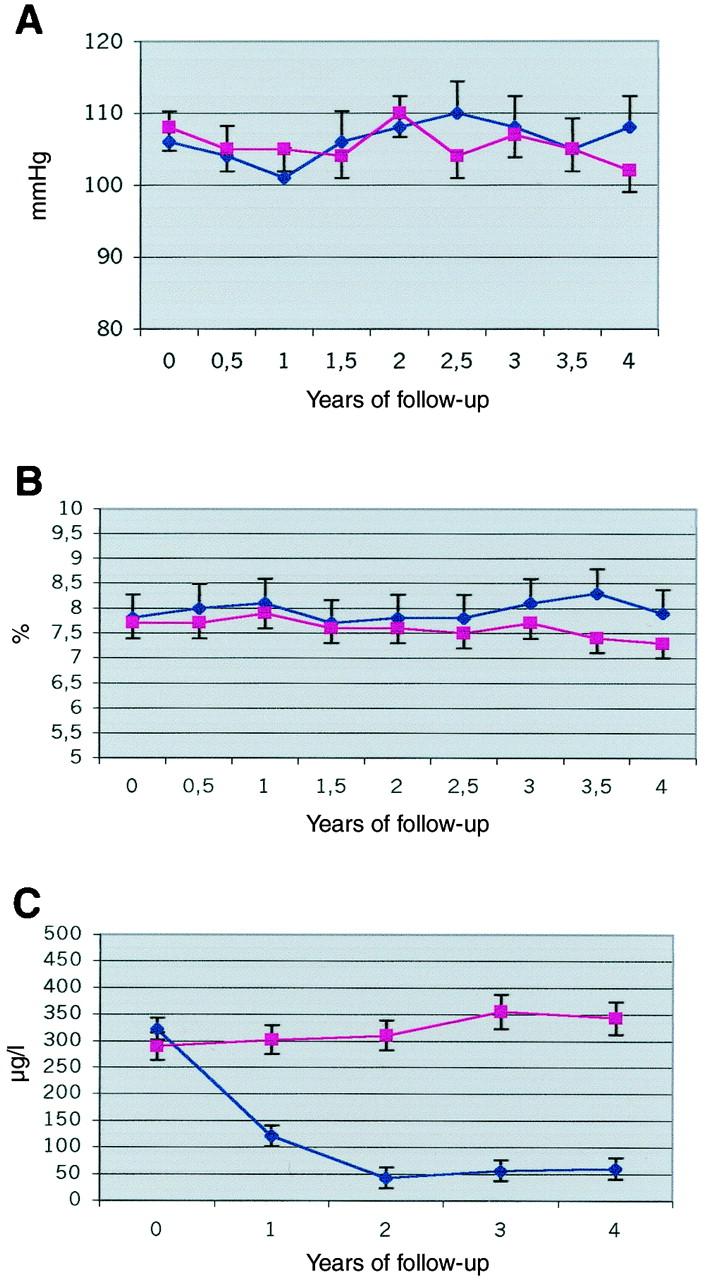
The low-carbohydrate aspect of the diet may have eliminated much of the iron-fortified flour foods, such as bread, and similar items such as breakfast cereal.
Eating low-iron poultry and fish instead of high-iron beef and pork, and eating dairy or eggs with meals, also lowers iron intake.
Especially, the drinking of tea and red wine with meals would substantially inhibit iron absorption. Tea inhibits iron absorption by up to 95%, while red wine inhibits it at about 65%. Note that tea was “highly recommended”. Coffee has nearly the same effect, so if you want to follow a diet like this and prefer coffee to tea, that would work well.
Finally, the exclusive use of olive oil for dressing and cooking would result in a further reduction of iron.
The ferritin level reached by this diet is similar to that seen in lacto-ovo vegetarians, who eat dairy and eggs but not meat. So if you're a meat eater, as most of us are, you can still lower iron levels to safe levels – but you won't be eating many hamburgers or steaks.
If you did nothing but drank tea, coffee, or red wine at meals and lowered your intake of beef and pork, you would likely get much of the iron-lowering benefits of this diet.
To my mind, the one disadvantage with this diet is that it took up to two years to bring ferritin levels down to a low normal level. If I had a ferritin of 300, which was the average in this group, I would want to get it lower more quickly, given what I know about its health benefits. Also keep in mind that many people have a much higher ferritin than 300, so getting it lower via diet will take even longer.
Nevertheless, this diet is a good strategy for lowering iron, especially when used together with other methods, and will work well in keeping it low.
Dose times duration determines iron toxicity
As mentioned, the low-iron diet takes awhile to lower body iron stores, up to two years even when followed strictly. This is because natural iron losses, outside of fertile women, are normally quite low. If someone has a high ferritin level, getting it lower quicker is better for health.
That's because the toxicity of iron is a function of the dose of iron – the amount in the body – times the duration – the length of time it's been there.
So the sooner you know your iron level, the faster you can do something about it. While an elderly person with a high iron can improve his or her health by taking measures to lower it, that person would have been better off if it had been discovered earlier.
Iron stores in men start to increase at about the age of 19, and rise to average adult levels by their mid-30s. Iron rises in women starting at about age 50. It would be wise for any man in his 20s, or any woman in her 50s, to know their ferritin levels so that they can begin to take action if necessary.
The iron-lowering interventions described above vary in the speed of lowering iron. Blood donation is the fastest; in theory, given a high rate of donation (once every two months), a donor could lower ferritin by 200 or more points a year. A low-iron diet, on the other hand, could take several years to accomplish the same result. As for iron chelation and inhibition of iron absorption, too many variables are in play to give a satisfactory answer to how long they take to lower iron to a safe level.
It would be wise to keep a record of both ferritin levels and the measures taken to lower them. If you undertake a program to lower your iron, you could ask your doctor for standing orders to get your ferritin tested, so that you wouldn't have to see the doctor every time you wanted to do so. By monitoring ferritin as well as the measures taken to lower it, it's possible to keep ferritin in an acceptable range, without going into iron deficiency or iron overload.
Takeaway points
The normal range and the optimal range of iron are not the same
The normal range underestimates health risks, which start within the normal range
Most doctors won't look twice at ferritin values within the normal range, so attaining optimal iron levels requires some effort on your part
Blood donation is the surest and quickest way to lower excessive iron
Natural iron chelators, all of which have health benefits, attach to iron in the body and remove it
Aspirin dramatically lowers cancer risk, and lowering iron may be the main way it does so.
Tea, coffee, dairy products, and several other food and drink items can greatly lower the absorption of iron from food
The Mediterranean diet's health benefits may be due partly or wholly to lowering iron
A diet low in iron and with added iron blockers like tea and red wine is effective at lowering ferritin, and lowers the death rate in people with kidney disease
References
- Ware, William R. "The Risk of Too Much Iron: Normal Serum Ferritin Levels May Represent Significant Health Issues." Journal of Orthomolecular Medicine 28.4 (2013). ↩
- Jung, Chang Hee, et al. "Elevated serum ferritin level is associated with the incident type 2 diabetes in healthy Korean men: a 4 year longitudinal study." PloS One 8.9 (2013): e75250. ↩
- Zhao, Zhuoxian, et al. "Body iron stores and heme-iron intake in relation to risk of type 2 diabetes: a systematic review and meta- analysis." PloS one 7.7 (2012): e41641. ↩
- Ford, Earl S., and Mary E. Cogswell. "Diabetes and serum ferritin concentration among US adults." Diabetes Care 22.12 (1999): 1978-1983. ↩
- Grobbee, Diederick E., et al. "Serum ferritin is a risk factor for stroke in postmenopausal women." Stroke 36.8 (2005): 1637-1641. ↩
- Zheng, Haoyi, et al. "Iron stores and vascular function in voluntary blood donors." Arteriosclerosis, thrombosis, and vascular biology 25.8 (2005): 1577-1583. ↩
- Zacharski, Leo R., et al. "Decreased cancer risk after iron reduction in patients with peripheral arterial disease: results from a randomized trial." Journal of the National Cancer Institute 100.14 (2008): 996-1002. ↩
- Facchini, Francesco S., Nancy W. Hua, and Riccardo A. Stoohs. "Effect of iron depletion in carbohydrate-intolerant patients with clinical evidence of nonalcoholic fatty liver disease." Gastroenterology 122.4 (2002): 931-939. ↩
- Ware, William R. "The Risk of Too Much Iron: Normal Serum Ferritin Levels May Represent Significant Health Issues." Journal of Orthomolecular Medicine 28.4 (2013). ↩
- Finch, Clement A., et al. "Effect of blood donation on iron stores as evaluated by serum ferritin." Blood 50.3 (1977): 441-447. ↩
- http://usatoday30.usatoday.com/news/nation/2011-08-06-blood-donation-record_n.htm ↩
- Youdim, Kuresh A., et al. "Flavonoid permeability across an in situ model of the blood-brain barrier." Free Radical Biology and Medicine 36.5 (2004): 592-604. ↩
- Jiao, Yan, et al. "Iron chelation in the biological activity of curcumin." Free Radical Biology and Medicine 40.7 (2006): 1152-1160. ↩
- Xu, Qi, Anumantha G. Kanthasamy, and Manju B. Reddy. "Neuroprotective effect of the natural iron chelator, phytic acid in a cell culture model of Parkinson's disease." Toxicology 245.1 (2008): 101-108. ↩
- Reznichenko, L., et al. "Reduction of iron‐regulated amyloid precursor protein and β‐amyloid peptide by (- )‐epigallocatechin‐3‐gallate in cell cultures: implications for iron chelation in Alzheimer's disease." Journal of neurochemistry 97.2 (2006): 527-536. ↩
- Mollet IG, Patel D, Govani FS, Giess A, Paschalaki K, Periyasamy M, et al. (2016) Low Dose Iron Treatments Induce a DNA Damage Response in Human Endothelial Cells within Minutes. PLoS ONE 11(2): e0147990. doi:10.1371/journal.pone.0147990 ↩
- Rothwell, Peter M., et al. "Effect of daily aspirin on long-term risk of death due to cancer: analysis of individual patient data from randomised trials." The Lancet 377.9759 (2011): 31-41. ↩
- Fleming, Diana J., et al. "Aspirin intake and the use of serum ferritin as a measure of iron status." The American journal of clinical nutrition 74.2 (2001): 219-226. ↩
- De Berardis G, Lucisano G, D'Ettorre A, et al. Association of Aspirin Use With Major Bleeding in Patients With and Without Diabetes. JAMA. 2012;307(21):2286-2294. doi:10.1001/jama.2012.5034. ↩
- http://www.nytimes.com/2012/03/21/health/research/studies-link-aspirin-daily-use-to-reduced-cancer-risk.html?src=me&ref=general ↩
- Morck, Timothy A., S. R. Lynch, and J. D. Cook. "Inhibition of food iron absorption by coffee." The American journal of clinical nutrition 37.3 (1983): 416-420. ↩
- Hurrell, Richard F., Manju Reddy, and James D. Cook. "Inhibition of non-haem iron absorption in man by polyphenolic-containing beverages." British Journal of Nutrition 81 (1999): 289-295. ↩
- Mascitelli, Luca, and Mark R. Goldstein. "Might some of the beneficial effects of the Mediterranean diet on non-alcoholic fatty liver disease be mediated by reduced iron stores?." Journal of hepatology 59.3 (2013): 639. ↩
- Buijsse, Brian, et al. "Oxidative stress, and iron and antioxidant status in elderly men: differences between the Mediterranean south (Crete) and northern Europe (Zutphen)." European Journal of Cardiovascular Prevention & Rehabilitation 14.4 (2007): 495-500. ↩
- Kim, Chul-Hee, et al. "Association of elevated serum ferritin concentration with insulin resistance and impaired glucose metabolism in Korean men and women." Metabolism 60.3 (2011): 414-420. ↩
- Facchini, Francesco S., and Kami L. Saylor. "A low-iron-available, polyphenol-enriched, carbohydrate-restricted diet to slow progression of diabetic nephropathy." Diabetes 52.5 (2003): 1204-1209. ↩
Keep going past iron
Iron is one lever, not the whole machine. P. D. Mangan writes every week about the rest of it: training, protein, insulin, sleep, and the research as it lands.
No charge, and you can unsubscribe at any time. You can also follow P. D. Mangan on X.